Projects • 75cm of Cat6 and a Lighter: The Worst FM Antenna That Actually Worked
This one is silly. I'm writing it up anyway.
I had the RTL-SDR set up as an ADS-B feeder — plugged into a mac mini, running dump1090, sending plane positions to ADS-B Exchange. At some point I got bored and disassembled it. Took the dongle, pulled off the 1090 MHz antenna, and started messing around.
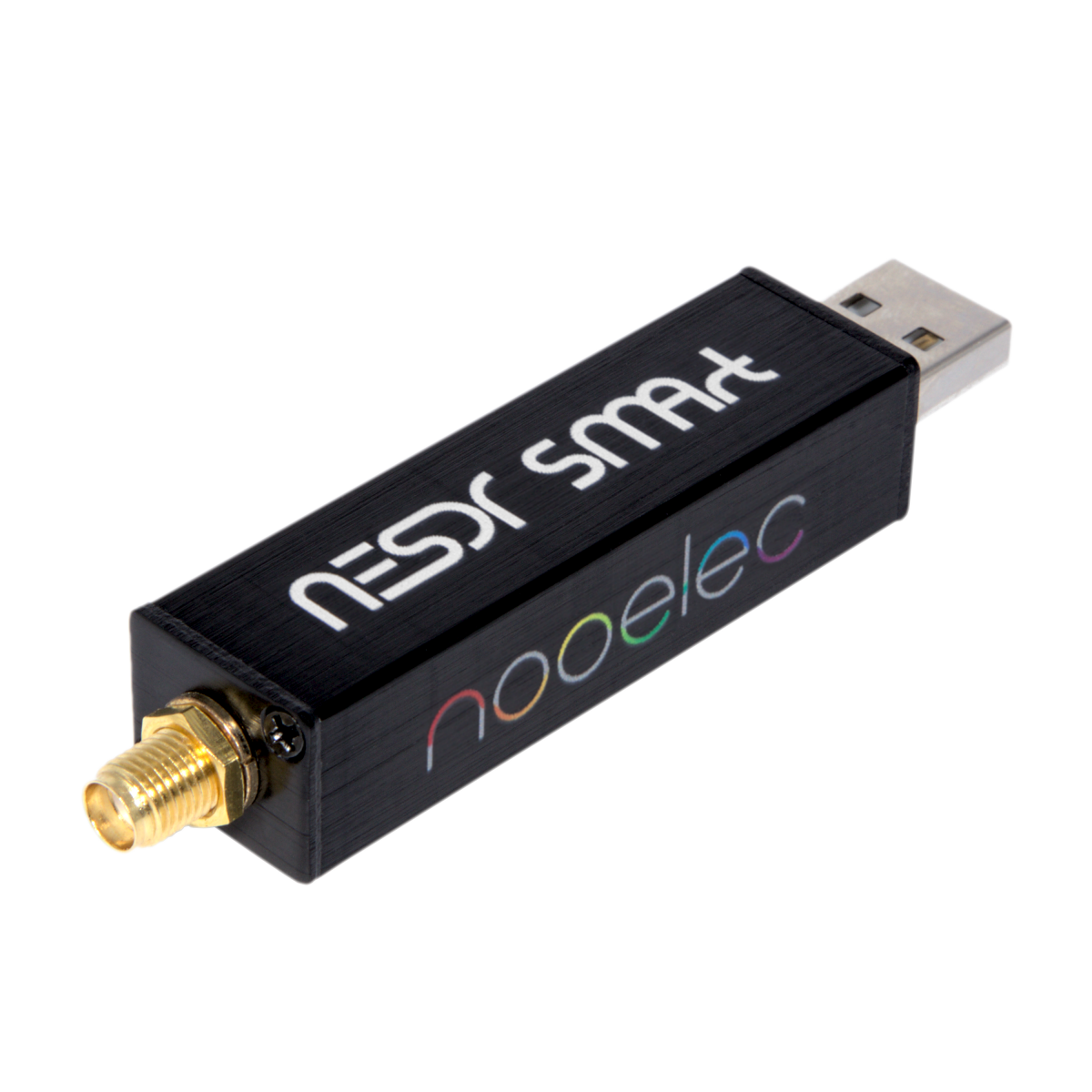
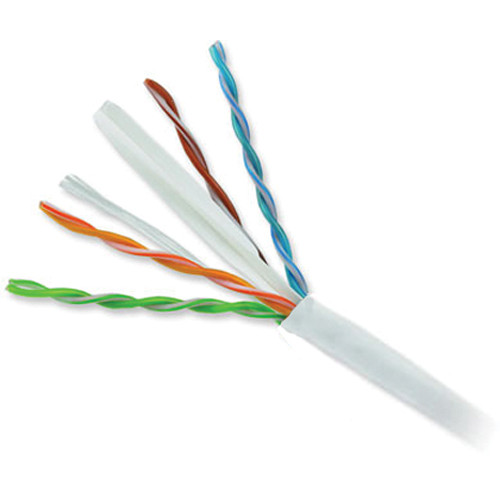
I grabbed a piece of Cat6 ethernet cable and cut off about a meter. Then I stripped the outer PVC sheath and separated out the four twisted pairs inside. I took one of the pairs, held one end in an electric drill, pinched the other end, and let it spin to untwist the wires. Then I got a tape measure and trimmed each wire down to exactly 75 centimeters — a quarter-wavelength at roughly 100 MHz, the middle of the FM band. Burned off the insulation at the tip with a lighter, and jammed the bare end into the center hole of the RTL-SDR's SMA connector.
I want to be clear about how janky this was. The SMA connector is meant to accept a proper coaxial plug. A bare wire just shoved into the center pin hole is not that. It was so loose that if I looked at it wrong it would fall out.
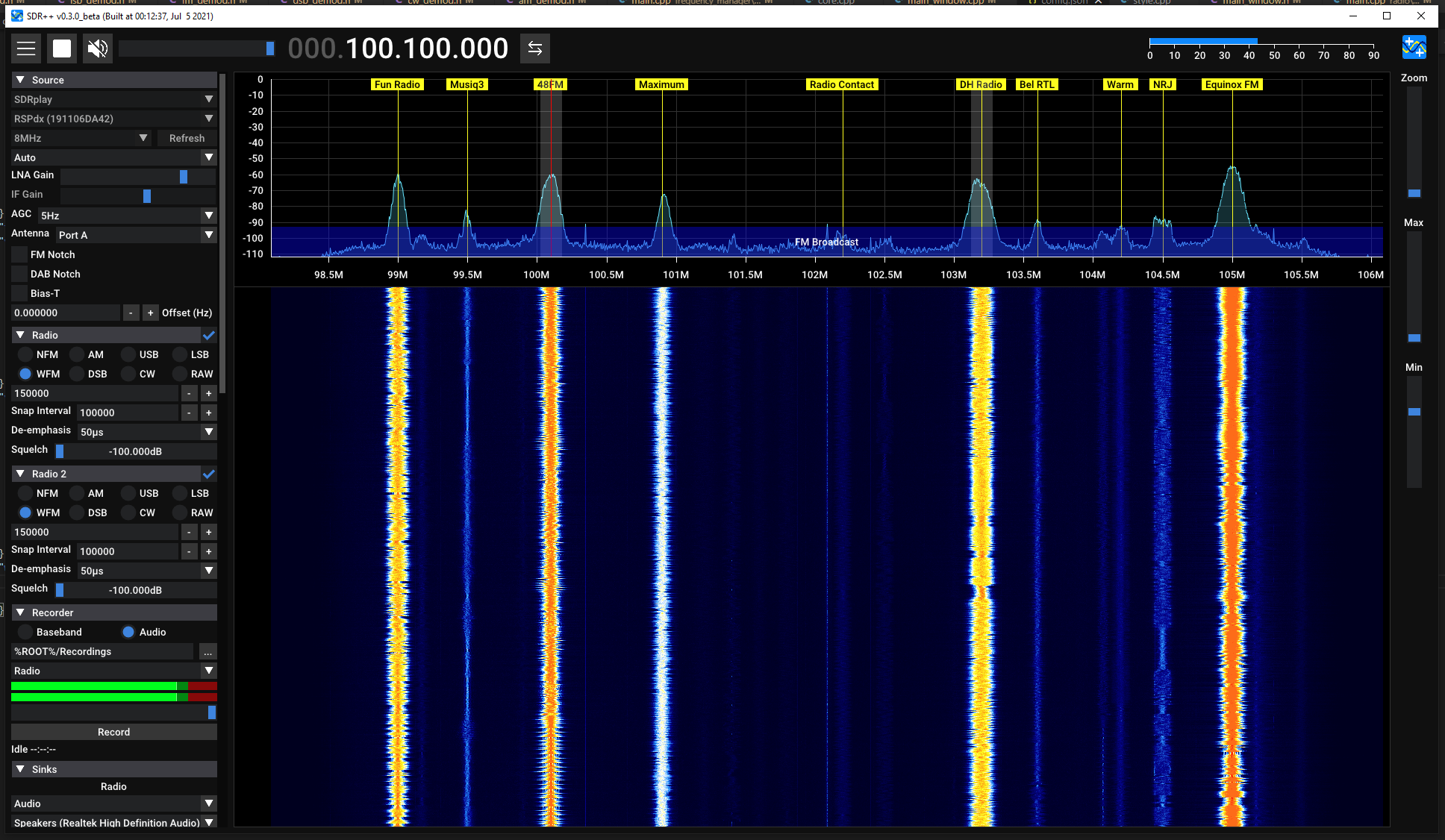
But while that wire was in there — it picked up FM radio. Crystal clear. I could tune around the dial in SDR++ and pull in stations like I was holding a real radio. You can also do it from the command line, which felt even cooler for no rational reason.
I'm not an electrical engineer but I know enough antenna theory to work out the math: FM radio in the US sits between 87.5 and 108 MHz — call it roughly 100 MHz in the middle. The wavelength at 100 MHz is about three meters. A quarter of that is 75 centimeters. So that's why I cut it to 75cm. The plan was actually to use both wires from the untwisted pair to make a dipole — one wire up, one wire down, each a quarter-wave, totaling a half-wave dipole. That's textbook.
The dipole was worse. Noticeably worse. I tried other things too — bending the wire, different configurations, more scraps of Cat6. Every attempt to make it more correct made it worse. I'd reassemble something, fire up SDR++, and the stations would be weaker or drop out entirely.
The antenna that worked best, by a comfortable margin, was the degenerate case: one wire, 75 centimeters, jammed in a hole. I'm sure there's a reason. I don't know what it is.
I think about this sometimes when I'm overengineering something.